Case 03 / 03
RDW
Run Doc Wellness · Direct-to-consumer product
Result
Launched end to end
From nothing to trading: an eleven-page storefront, the diagnostic, paid media and lifecycle.
Nobody buys orthotics from an advertisement. They buy them because someone credible told them which ones they needed.
The record
- Pages designed, desktop and mobile
- 11Pages designed, desktop and mobile
- Questions in the diagnostic
- 9Questions in the diagnostic
- Lifecycle emails written
- 27Lifecycle emails written
The brief
A product with a real clinical rationale and no obvious way to explain it in a feed. The category is crowded with foam insoles sold by marketing departments, so the launch had to do two things at once: make the clinical difference legible, and put the person behind it on the page.
That person is Dr. Mitchell Wachtel, a board-certified podiatrist with twenty-five years of practice. The whole storefront is built so that fact does the selling.
What we ran
The credential is the creative.
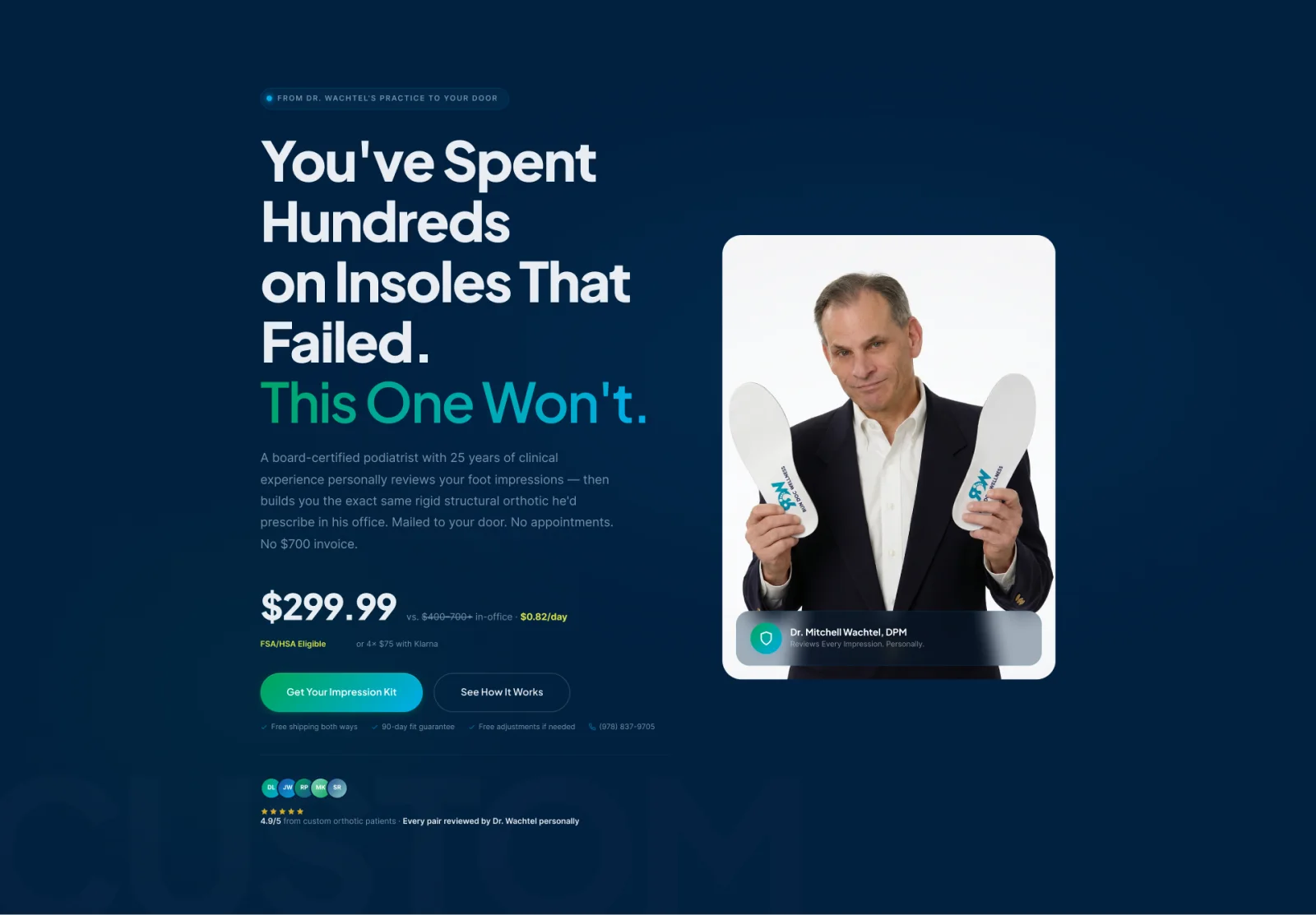
Dr. Wachtel appears above the fold on every commercial page — named, captioned, holding the actual product. Not a trust badge and not a logo strip, but the person whose licence is on the line, shown doing the thing. In a category full of anonymous brands that is the whole argument.
A comparison nobody else will publish.
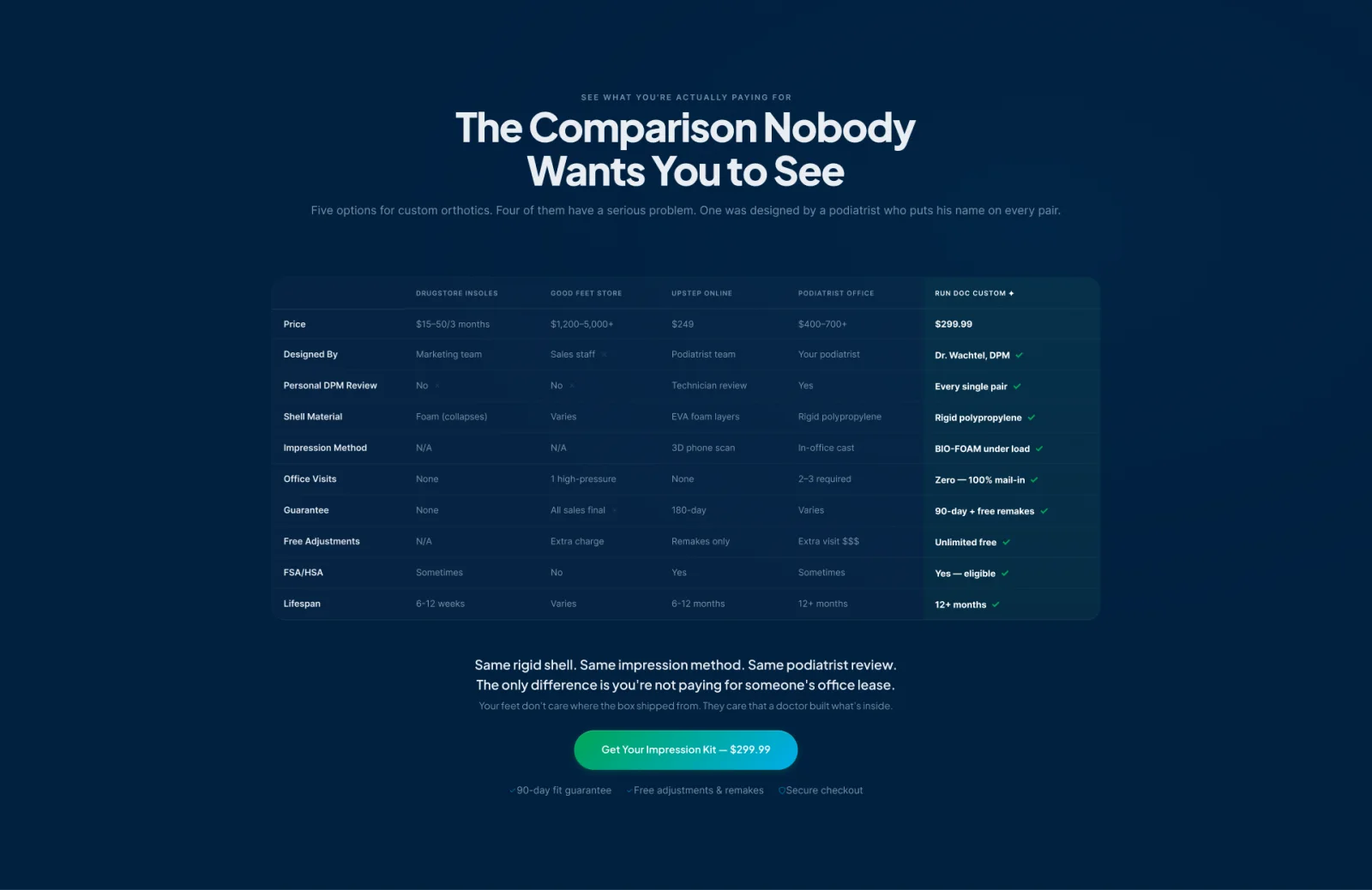
Five options set side by side across ten attributes: price, shell material, who designed it, whether a podiatrist ever actually sees your foot. Naming competitors is uncomfortable, and it is also the fastest way to end someone's deliberation. The page exists because the honest comparison happened to be flattering.
The assessment is the shopfront.
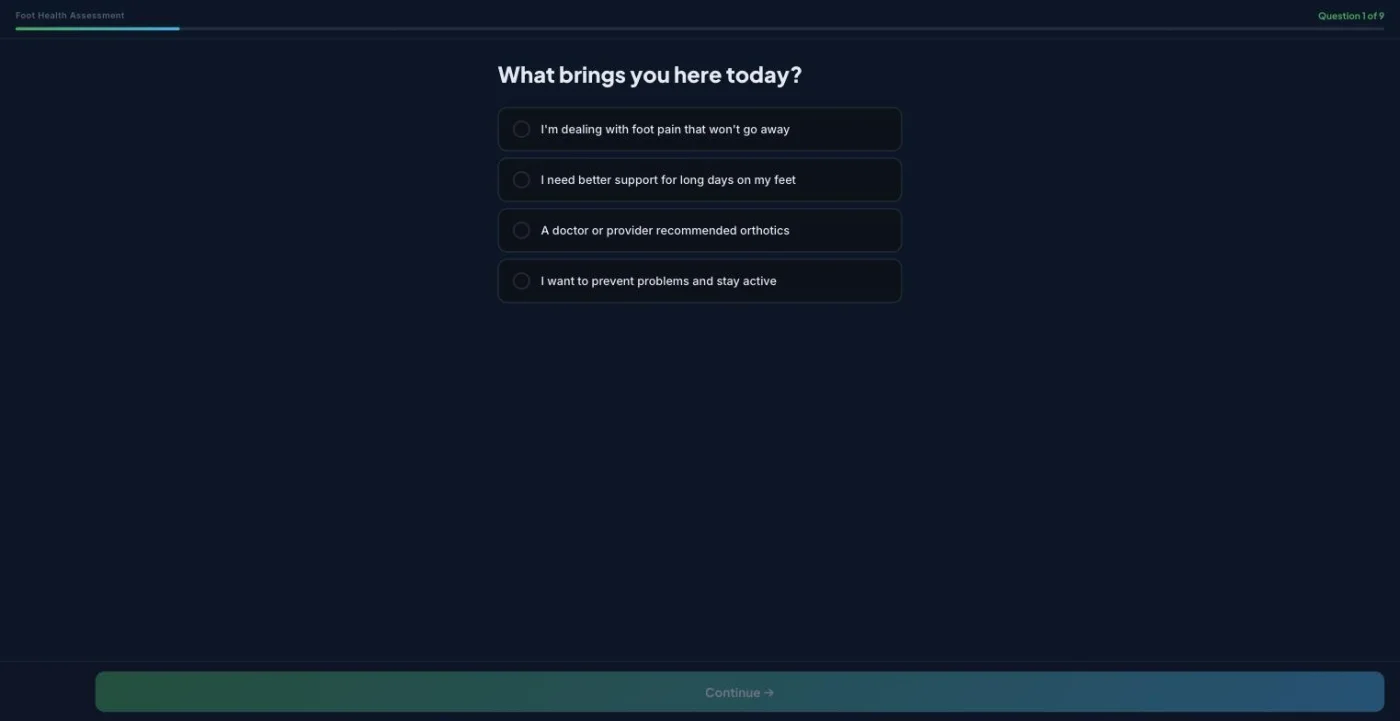
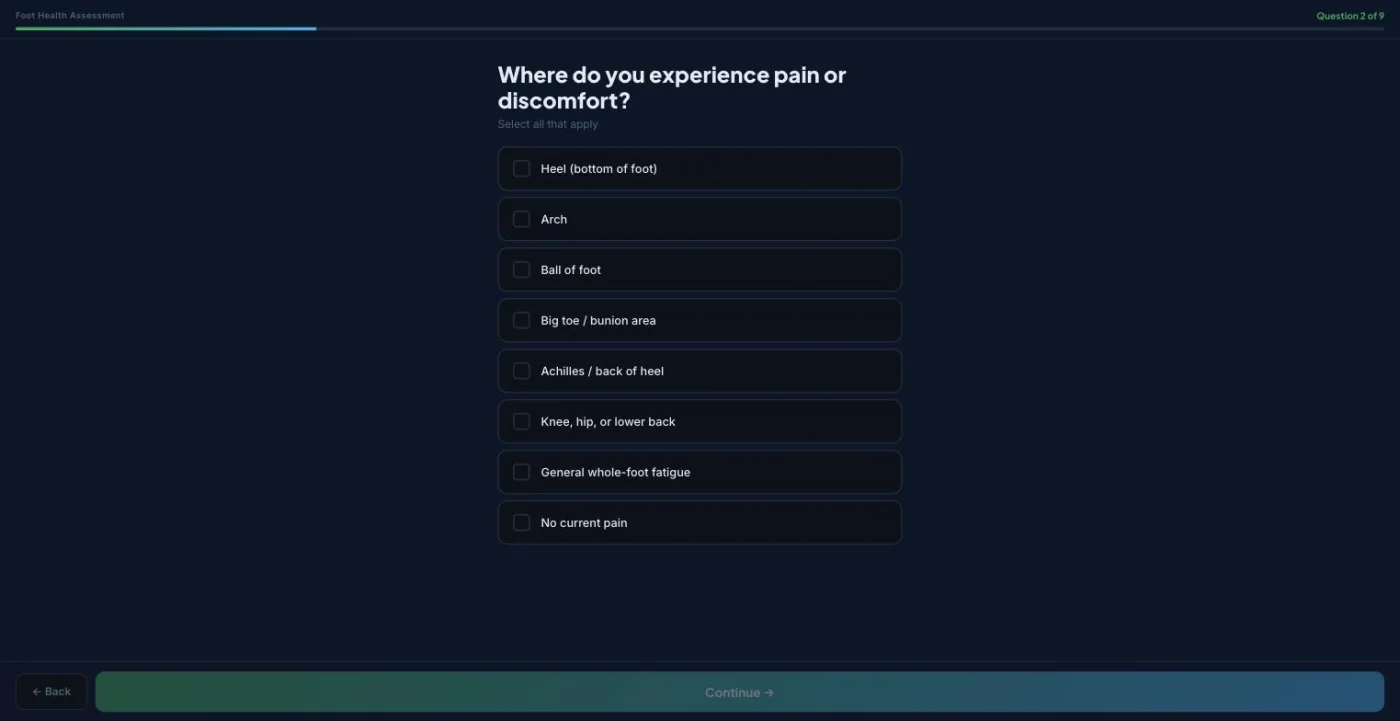
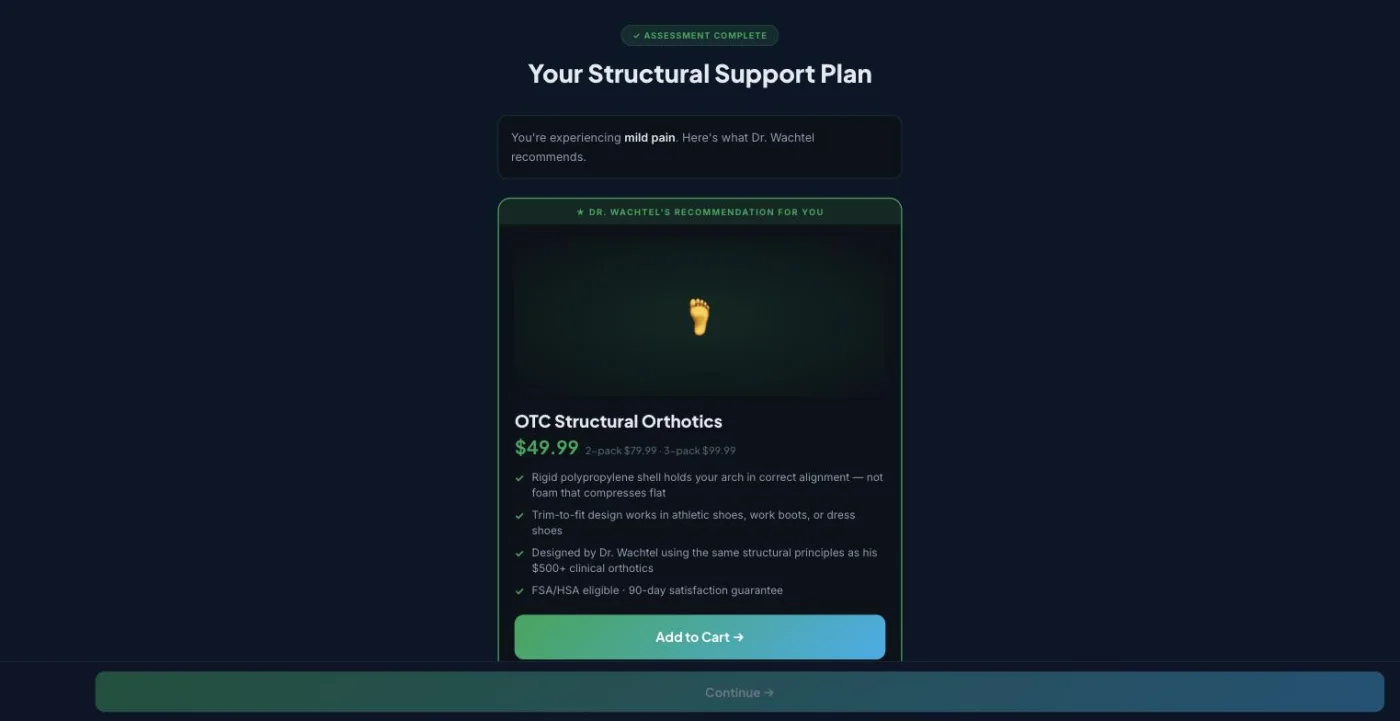
Nine questions, opening on intent rather than on symptoms and ending in one recommendation at one price. It is the entry point for paid media rather than a secondary page, which is why the sale is specific instead of a catalogue browse.
Storefront, funnel and lifecycle as one build.
There was no existing stack to integrate with — the rare case where tracking can be correct from the first day. Eleven pages, the assessment, the order flow and the post-purchase sequence were specified together rather than bolted on in sequence.
The storefront
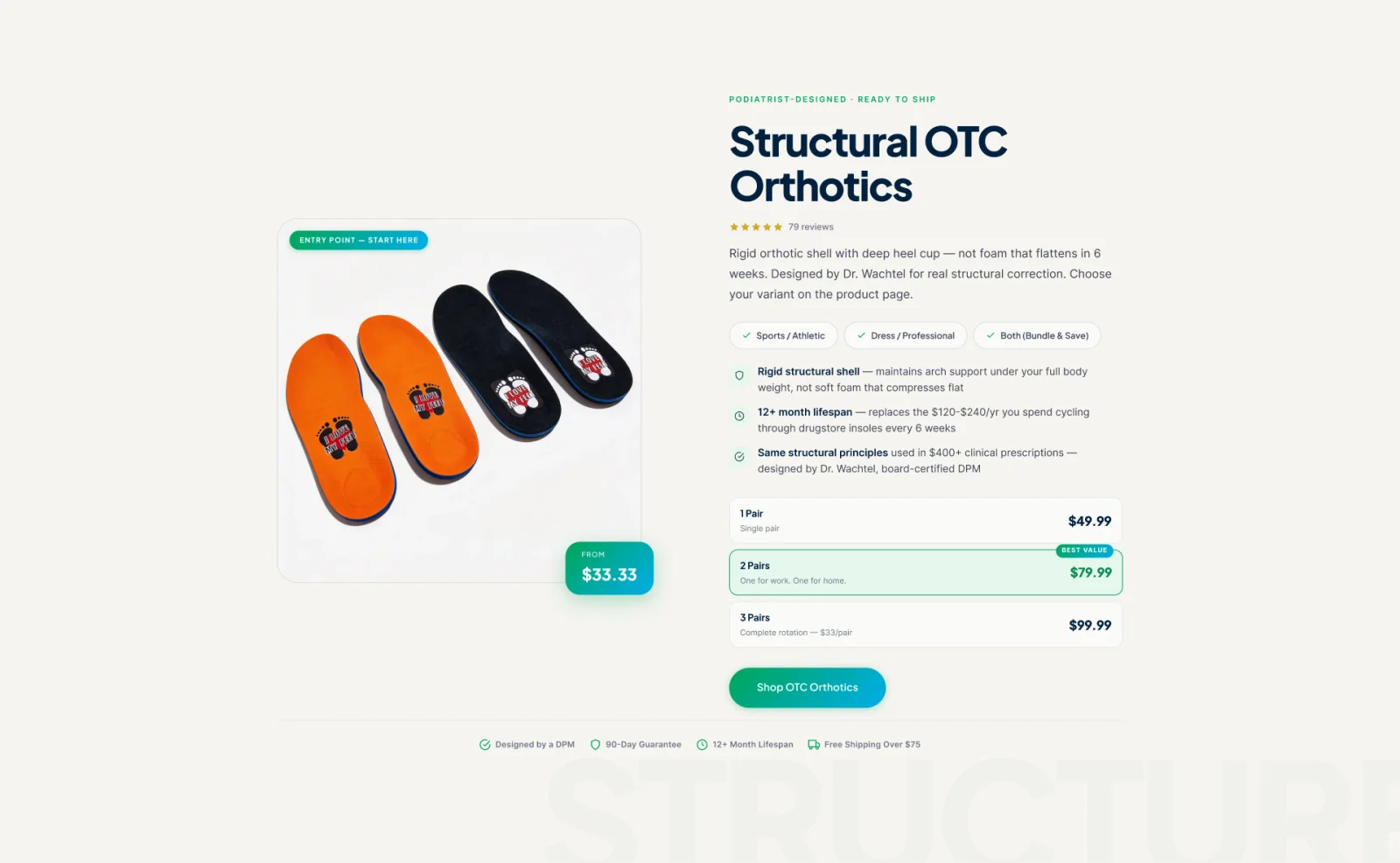
Eleven pages, desktop and mobile. Every commercial page opens on the podiatrist rather than on the product, and closes on a single price.

The assessment
Nine questions, ending in a recommendation and a price. It opens on why the visitor is here rather than on what hurts, because intent sorts the list far better than symptoms do — and it closes on a single product rather than a range, which is the whole point of asking.
Scope
- Go-to-market
- Website design and build
- Conversion copywriting
- Diagnostic funnel
- Paid media
- Email and lifecycle
- Tracking and reporting
Contact
Let’s talk.
Tell us what isn’t moving and we’ll tell you whether we can help.